How to Make a Self-Care Planner More Realistic
Plan small restorative actions that fit ordinary days instead of creating another demanding checklist.
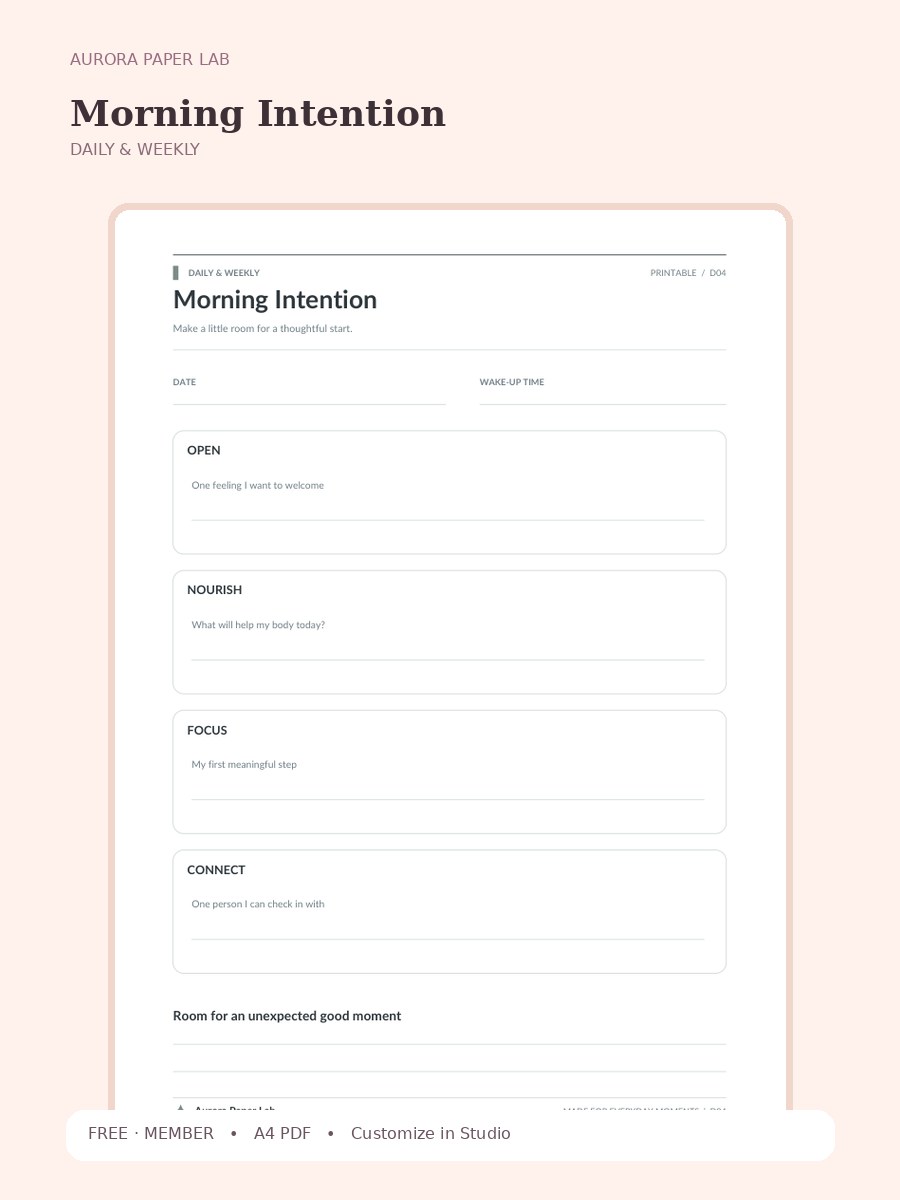
Why this approach works
A realistic self-care planner focuses on basic actions that support capacity instead of creating another idealized checklist to complete.
Set up the page before you start
Start with needs that are easy to overlook: meals, hydration, medication as prescribed, movement, rest, social support, appointments and quiet time.
A practical workflow
Choose a few actions that fit the week you actually have. Put demanding activities on lighter days and use low-effort options when time or energy is limited.
Example
A difficult week may call for a ten-minute walk, one prepared meal, an earlier bedtime and a message to a friend rather than an elaborate wellness routine. The example is intentionally simple.
Common mistakes to avoid
Do not use the planner to judge whether you are doing enough. The page is a support tool, not a measure of worth or a substitute for medical or mental-health care.
Review and improve the system
At the end of the week, ask which actions genuinely helped and which felt like obligations. Keep the helpful ones and simplify the rest.
A realistic example to work from
A realistic self-care plan focuses on basic, repeatable support rather than an ideal routine full of expensive or time-consuming activities. Start with the constraints of the actual week. A short walk, a protected lunch break, calling a friend or preparing tomorrow's bag may be more useful than a long list of aspirational rituals.
A practical quality checklist
- Activities fit the available time and budget
- Basic needs are considered before optional treats
- The plan includes both restorative and practical actions
- The minimum version is small enough for a difficult day
- The page does not frame missed activities as failure
- Professional care is treated separately from lifestyle planning
If two or more of these checks repeatedly fail, simplify the workflow before adding another page, app or decorative element.
Problems that usually make this harder than necessary
- Copying an influencer routine that does not fit your life
- Scheduling self-care so densely that it becomes another obligation
- Treating shopping as the default solution
- Using a planner page instead of seeking appropriate professional support
These problems have a common pattern: the planner starts asking for more maintenance than the activity itself.
Adapt the method to your situation
- A five-minute daily reset
- One protected weekly block
- A recovery plan for especially busy work periods
The format can also change over time.
Questions for the next review
At the end of a week, project, trip, reading cycle or other natural review point, answer only the questions that help you decide what to do next:
- What would genuinely reduce friction this week?
- Which activity is restorative rather than performative?
- What is the smallest useful version?
- Is there any need here that requires support beyond a planner?